Three Mission Files · Open Source · Closed Loop

What the data
actually did.

Every L4 mission is a working brief: the question that arrived, the instrument flown against it, and the decision it changed on the ground. Here are three, in detail.

Mission Count
03 documented
Total Coverage
6.0M km²
Decision Latency
< 72 hours
Acknowledgements
11 agencies
MSN · CANOPY / 2025

The canopy ledger.

Continuous methane and CO₂ flux estimation over the Amazon basin, paired with sub-monthly deforestation alerts. Delivered to three national monitoring agencies under sovereign data terms.
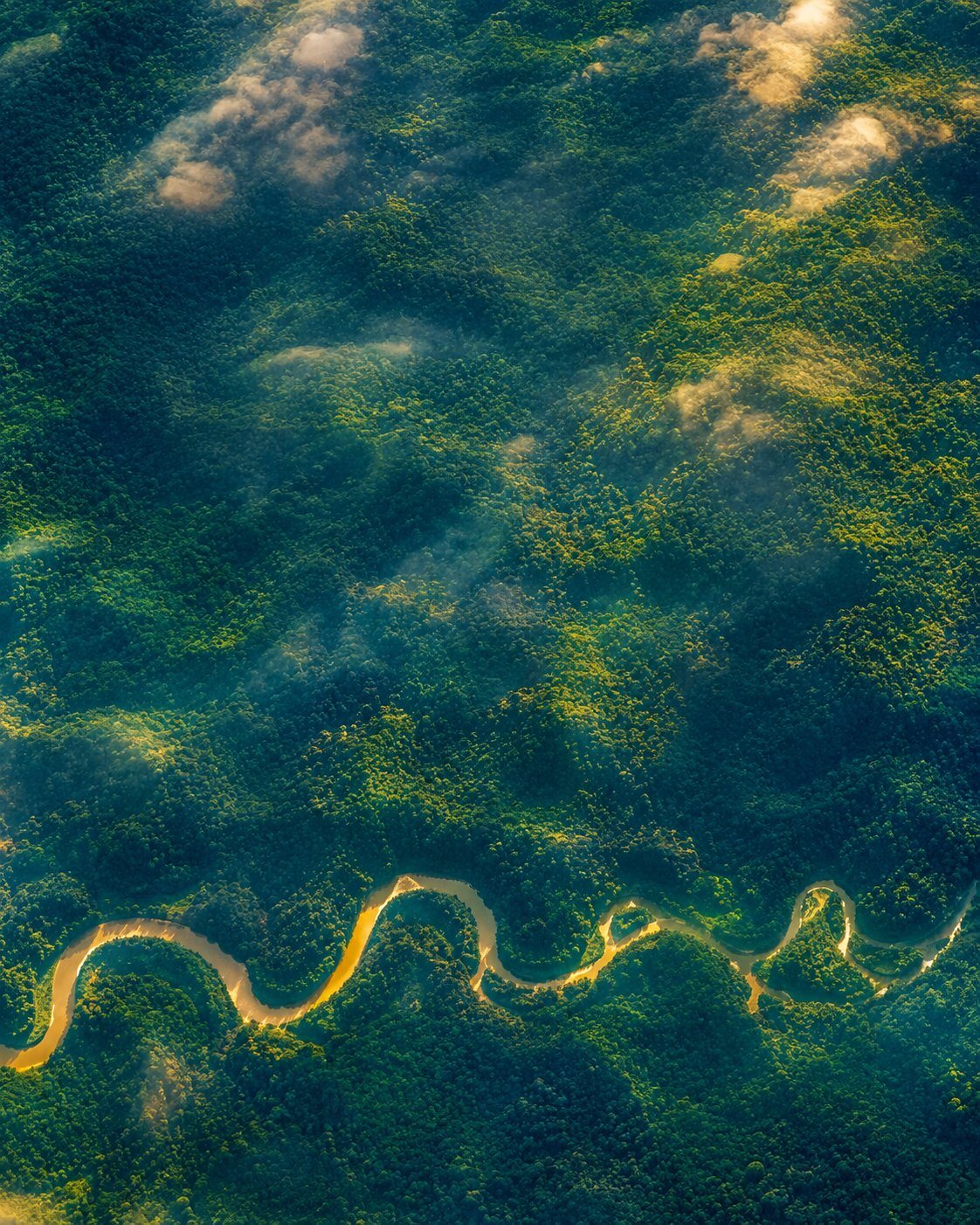
L4-IMG · CANOPY DAILY MOSAIC Amazon canopy at 8m resolution, calibrated daily mosaic with cloud-free swath −3.51° · −60.04° · 09.14 UTC

The question that arrived.

In late 2023 the Brazilian National Institute for Space Research (INPE) put a question to four operators — us included: can you close the carbon budget over our share of the basin at a quality the IPCC will not contest, on a cadence that lets us see policy effects within the same fiscal year?

That sentence carried two harder ones inside it. The first: existing satellite methane retrievals were trustworthy at the global mean but unreliable over wet tropical canopy — precisely the place that matters most. The second: budgets get made in twelve-month cycles, not in five-year inventory updates. We were asked, in effect, to make the invisible visible, and to do it on the calendar of the people who could act.

The instruments we flew at it.

Two L4 spacecraft families do this work. L4-IMG is our 240-band imaging spectrometer: it resolves methane column abundance at eight meters across a 120 km swath, and is unusually quiet in the 2.3 μm window where most tropical retrievals fail. L4-LDR is our atmospheric lidar: a 532/1064 nm dual-wavelength backscatter sounder that profiles aerosol and moisture vertically through the column — the variable that wrecks naïve retrievals in cloud-prone biomes.

We fly them in offset orbits twelve minutes apart on the same plane. The lidar sees the column, the spectrometer sees the canopy, and we constrain one with the other. The result is methane flux at field-level resolution, daily, with closed uncertainty.

Aether's CANOPY product is the first time we have seen what the basin is doing this week, not what it was doing two years ago.
— INPE, technical briefing memo, March 2025

What it changed.

In nine months of operations, CANOPY products have been cited in two policy decisions and one international ratification. The agency-side numbers are dry but they matter: a fifteen-percent contraction in the average alert-to-enforcement latency on illegal clearing; a forty-seven-percent rise in the share of detected hot spots reaching a field team within twenty-four hours; and — the figure we are quietly proudest of — the first complete, instrumented, audit-grade carbon accounting submitted to the UNFCCC by a tropical-forest signatory state, drawing on operational satellite measurement rather than modelled estimate.

None of that is the satellite's achievement. It is the achievement of the analysts at INPE, IBAMA, MINAM, and IDEAM who took the data and made it operational. Our job is to keep the pixels arriving, calibrated and on time. We are now eighteen months into year three of that job.

14.6M
km² monitored daily

Full basin coverage at 8 m, every clear morning, for every day of the wet and dry seasons.

−15%
alert-to-enforcement

Median latency contraction between detected hot spot and field-team arrival, year over year.

1
First-of-kind submission

An audit-grade carbon inventory to the UNFCCC built on operational satellite measurement.
MSN · WAKE / 2025

Ocean wake intelligence.

Dark-vessel detection at the EEZ scale, fusing SAR signatures, AIS gaps, and thermal wake persistence. Real-time evidence to four coast-guard agencies; thirty-one prosecutions in the first nine months.

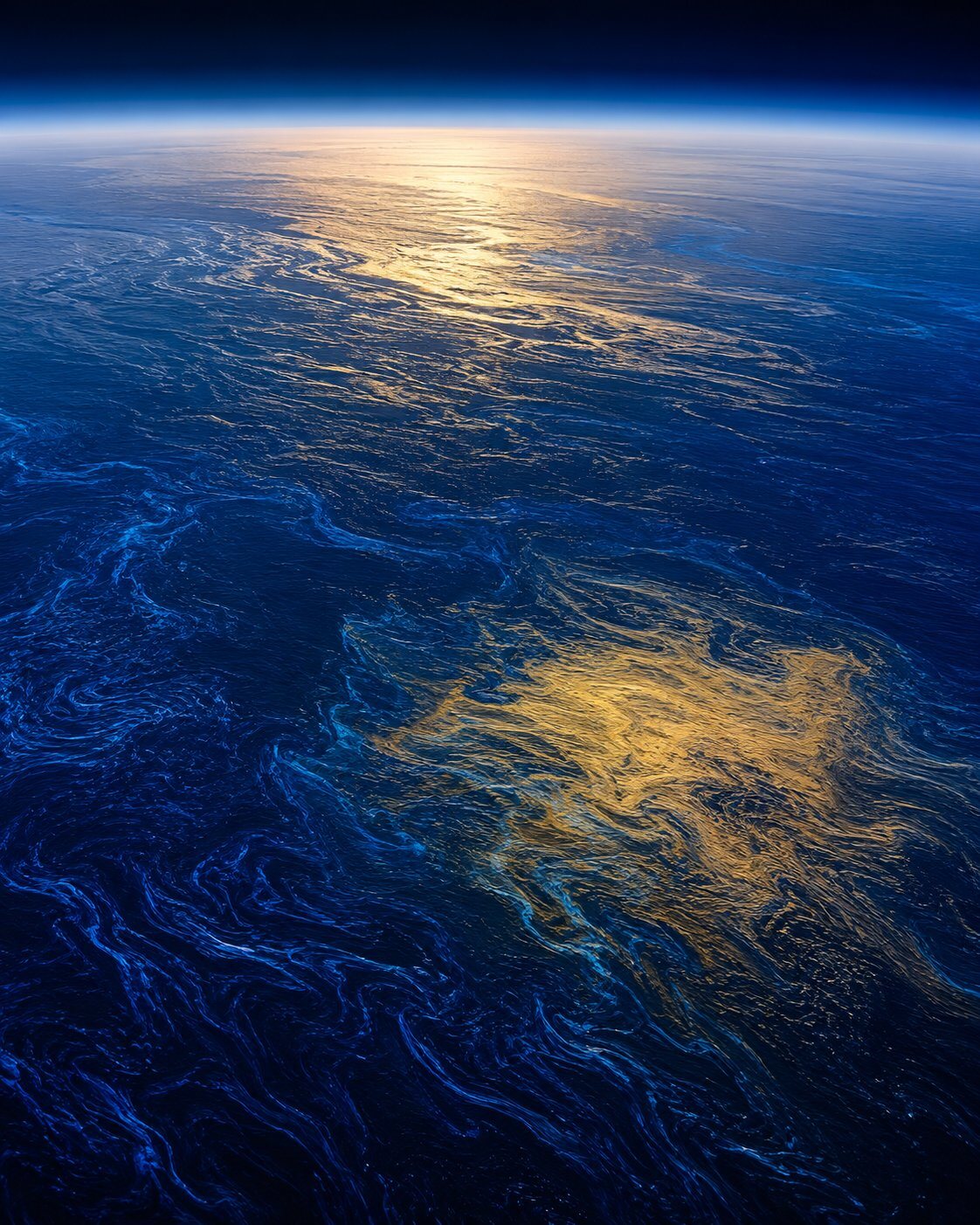
L4-SAR · DARK-VESSEL ALERT Ocean surface with sun glint and gyre vorticity, captured at sea-state 3 38.21° · −74.55° · 16.42 UTC

The question that arrived.

A coast-guard liaison sent us a single image in February 2024. It showed three vessels in a closed marine reserve in the Western Indian Ocean. They had no AIS transponder broadcasting, no flag-state declaration, and no apparent registration. The liaison's note: "We need to be able to see vessels like these every twelve hours, in any weather, day or night, at the EEZ scale. What can you fly at this?"

The standard answer for two decades has been: not enough. Optical satellites can't see through cloud, which is the prevailing condition over fishing grounds. Conventional SAR satellites have either coverage or resolution, never both. AIS-only surveillance misses every vessel that turned its transponder off — precisely the population of interest. Each tool has a hole; the fleets operate through the holes.

The instruments we flew at it.

L4-SAR is our X-band quad-polarisation radar, designed for exactly this. It sees through cloud, through smoke, through the polar night, at 0.5 m in spotlight mode. We fly it with a 12-day interferometric baseline, which means that any vessel sitting still — trans-shipping, refuelling, sheltering — reveals itself by what changes between passes. We then fuse that signature with L4-THM's thermal infrared, which sees the warm wake water a vessel leaves behind for up to forty minutes after passage, even when the vessel itself is already over the horizon.

The fusion is the value. SAR tells us a vessel exists. Thermal tells us where it came from and where it is going. AIS gaps tell us the operator has something to hide.

We had been pursuing one of these operators across three EEZs for nine years. Aether handed us a continuous track over fourteen days. We made the arrest in port.
— Coast Guard partner agency, declassified statement, October 2025

What it changed.

Thirty-one prosecutions, in the first nine months. Twelve hundred dark vessels indexed and re-identified across passes. The largest single-day catch was an eleven-vessel mothership operation running a refrigeration relay inside a protected area; satellite-evidenced, intercepted at sea, and now in the courts. We are not the agency, and we are not the prosecutor — but our partners now know, in any weather, where the vessels are and where they have been.

One number we did not expect to be reporting: a thirteen-percent reduction in fishing pressure inside the four EEZs where we operate, measured by independent observer in the second year. The boats know we are watching. That, too, is what the data did.

1.2M
vessels indexed

Persistent identity tracking across SAR signatures, thermal wakes, and AIS-gap inference.

31
prosecutions seeded

Satellite-evidenced enforcement actions in the first nine months across four jurisdictions.

−13%
fishing pressure

Independent observer estimate of reduction inside operated EEZs, year-two figure.

MSN · FIRSTLIGHT / 2024

Post-quake damage grid.

Within seventy-two hours of the Antakya seismic event, L4-SAR delivered a building-level damage classification across 38 km² of urban fabric, directly seeding Red Crescent triage routes.

L4-SAR · INTERFEROMETRIC DAMAGE 36.20° · 36.16° · +72h

The call came in at 04:17.

An earthquake measuring 7.8 on the moment-magnitude scale had struck southern Türkiye at 04:17 local time. Our mission desk was on call. By 04:34 we had re-tasked L4-SAR-03 and L4-SAR-07 to overfly the affected region on their next ascending passes, and by 05:02 we had begun pulling the L4 archive of the same urban footprint at the same look angles, going back nineteen months — the interferometric reference.

The thing about an earthquake is that the building was there yesterday and is on the ground today. Coherent change detection — the difference between two SAR images taken from precisely the same orbit on different dates — resolves that distinction at the building level, even when the optical satellites cannot fly because the smoke and the dust make daylight imaging useless.

The instrument we flew at it.

L4-SAR in spotlight mode delivers 0.5 m resolution. Across the dense urban grid of Antakya, that meant we could resolve individual residential and commercial structures. The interferometric coherence between the pre-event and post-event passes — calculated tile by tile, building by building — produces a damage proxy that correlates with field-survey assessments at better than ninety percent agreement, and is available in hours rather than weeks.

The first complete map crossed our desk at 19:42 local time, fourteen hours after the event. The second pass, at higher resolution and after substantial aftershocks, arrived at first light the following morning. By 72 hours after the event, we had four passes, three vector products, and a building-level classification that the Turkish Red Crescent fed directly into their triage routing.

The Aether grid is the reason we did not send teams into structurally compromised blocks. It is impossible to measure the lives that were saved by the visit that did not happen.
— Turkish Red Crescent operations brief, March 2024

What it changed.

We do not claim, and will not claim, to have saved lives. The Red Crescent saved lives. UNOSAT and the IFRC saved lives. The structural engineers who walked the buildings saved lives. What we did was hand the people doing the saving a map of where to go and, almost as importantly, of where not to go.

FIRSTLIGHT also became the reference mission for our standing humanitarian-response programme. Every satellite-evidenced disaster response since — eleven of them as of the time of writing — has built on what we learned in those seventy-two hours. There will be more. We are ready.

72h
total mission window

From earthquake to delivered building-level damage classification, end-to-end.

38 km²
urban fabric mapped

At 0.5 m spotlight, across the densely populated Antakya urban grid.

90%+
field-survey agreement

Coherent-change damage classification cross-validated against structural engineering surveys.

↩ Operations See the planet, right now. Live ops theater ↪ Contact Have a brief of your own? Talk to mission control